Voiceflow named in Gartner’s Innovation Guide for AI Agents as a key AI Agent vendor for customer service

Gartner published its latest report, Innovation Guide for AI Agents. To us, the takeaway is clear: the solutions featured go beyond conversation. They take action, orchestrate systems, and deliver outcomes. 

In other words, AI is graduating from answering questions to actually doing the work.

This marks a meaningful shift in how organizations think about AI in enterprise settings. In that context, Voiceflow’s inclusion in Gartner’s customer service category, alongside vendors focused on customer experience, support, and incident management, signals how the market is evolving.

This isn’t about buzzwords. It’s about what real teams need from AI today.

From “better chat” to real work done

For years, businesses have invested in chatbots and virtual assistants to handle low-complexity conversations: answer FAQs, provide links, and route tickets. Helpful, but limited. Like a concierge who can point you in the right direction but can’t actually solve the problem.

These systems inform. They don’t act.

Gartner’s framing of AI agents describes a different class of software. Systems that can pull account data, update records, execute workflows, and resolve issues across tools with autonomy and reliability. Less talk, more execution.

This transition matters deeply for customer service because:

  • Support teams process high volumes of repeatable requests
  • Customers increasingly expect fast, accurate resolution
  • The biggest operational bottleneck isn’t answering questions. It’s completing tasks

AI agents are designed to close that gap, turning conversations into outcomes.

Why this matters

This isn’t about recognition for recognition’s sake.

We believe it’s about validation that AI agents are becoming a real enterprise category.

When research firms start mapping a landscape, it usually means the market has moved past experimentation. Budgets follow. Roadmaps form. What used to be a pilot becomes infrastructure.

Customer service is one of the first domains where that shift is happening at scale. Voiceflow’s inclusion reflects that broader movement, from “interesting demo” to “mission-critical system.”

The path forward for support organizations

The future of AI in customer service isn’t about replacing human agents. It’s about giving them leverage.

Let software handle the routine, repeatable work. Let humans focus on judgment, empathy, and the edge cases that actually require expertise.

That means:

  • Building agents that can reliably interact with internal systems
  • Designing workflows that are observable and controllable
  • Ensuring AI behavior aligns with compliance, privacy, and risk requirements
  • Treating agent deployment like production software, not a chatbot experiment

The teams that get this right won’t just deflect tickets. They’ll redesign how support operates.

What’s next: Toward a new generation of AI agents

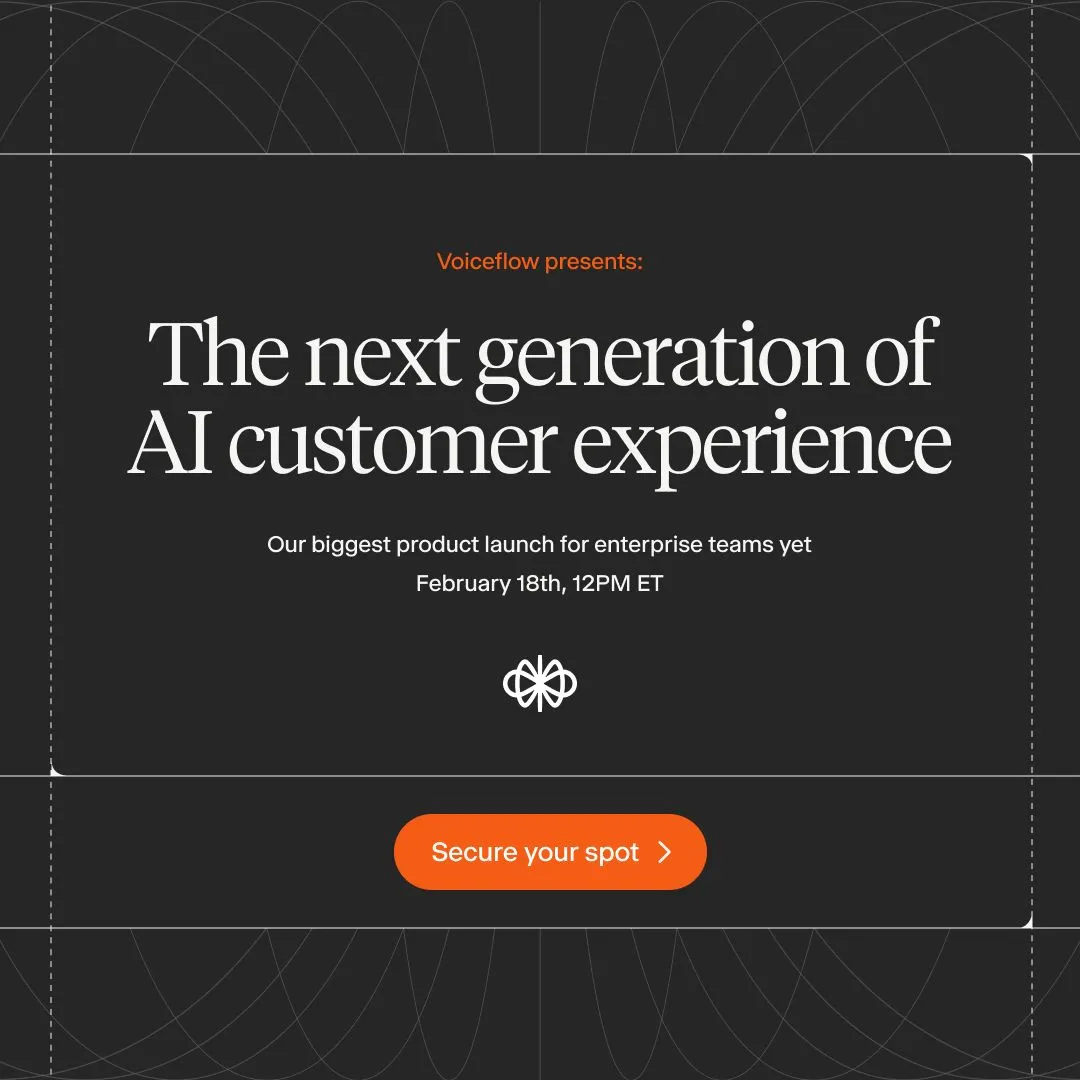
In that spirit, we’re excited for what’s ahead. On February 18, we’ll be launching the next generation of Voiceflow, a platform designed to help teams design, deploy, and govern production-grade AI agents that go beyond prototypes and truly automate work across customer support scenarios.

If you’re exploring how AI agents can transform your support operations, you can learn more and join the event here: https://www.voiceflow.com/nextgen
Our view is that Gartner’s report underscores that we’re entering a new era for AI in business, and customer service is where the potential for impact is both clear and immediate.

The question isn’t whether AI agents matter.

It’s how fast organizations adopt them, and how effectively they put them to work.

Interested in seeing Voiceflow in action? Book a demo today.

From “better chat” to real work done

For years, businesses have invested in chatbots and virtual assistants to handle low-complexity conversations: answer FAQs, provide links, and route tickets. Helpful, but limited. Like a concierge who can point you in the right direction but can’t actually solve the problem.

These systems inform. They don’t act.

Gartner’s framing of AI agents describes a different class of software. Systems that can pull account data, update records, execute workflows, and resolve issues across tools with autonomy and reliability. Less talk, more execution.

This transition matters deeply for customer service because:

  • Support teams process high volumes of repeatable requests
  • Customers increasingly expect fast, accurate resolution
  • The biggest operational bottleneck isn’t answering questions. It’s completing tasks

AI agents are designed to close that gap, turning conversations into outcomes.

Why this matters

This isn’t about recognition for recognition’s sake.

We believe it’s about validation that AI agents are becoming a real enterprise category.

When research firms start mapping a landscape, it usually means the market has moved past experimentation. Budgets follow. Roadmaps form. What used to be a pilot becomes infrastructure.

Customer service is one of the first domains where that shift is happening at scale. Voiceflow’s inclusion reflects that broader movement, from “interesting demo” to “mission-critical system.”

The path forward for support organizations

The future of AI in customer service isn’t about replacing human agents. It’s about giving them leverage.

Let software handle the routine, repeatable work. Let humans focus on judgment, empathy, and the edge cases that actually require expertise.

That means:

  • Building agents that can reliably interact with internal systems
  • Designing workflows that are observable and controllable
  • Ensuring AI behavior aligns with compliance, privacy, and risk requirements
  • Treating agent deployment like production software, not a chatbot experiment

The teams that get this right won’t just deflect tickets. They’ll redesign how support operates.

What’s next: Toward a new generation of AI agents

In that spirit, we’re excited for what’s ahead. On February 18, we’ll be launching the next generation of Voiceflow, a platform designed to help teams design, deploy, and govern production-grade AI agents that go beyond prototypes and truly automate work across customer support scenarios.

If you’re exploring how AI agents can transform your support operations, you can learn more and join the event here: https://www.voiceflow.com/nextgen

Our view is that Gartner’s report underscores that we’re entering a new era for AI in business, and customer service is where the potential for impact is both clear and immediate.

The question isn’t whether AI agents matter.

It’s how fast organizations adopt them, and how effectively they put them to work.

Interested in seeing Voiceflow in action? Book a demo today.

RECOMMENDED
square-image

RECOMMENDED RESOURCES
No items found.