


![The Best Omnichannel AI Customer Support Platform [2026]](/images/omnichannel-ai-customer-support-hero.webp)
Most enterprise support operations did not choose to be omnichannel. They grew into it.
A chat widget went on the website. A WhatsApp number was set up for a regional market. The contact center kept its phone lines. Email never went away.
And somewhere along the way, the team responsible for all of it, usually a support operations leader with an already full remit, became the de facto owner of a fragmented channel stack that was never designed to work together.
The fragmentation is the problem AI is supposed to solve. But not all AI customer support platforms solve it the same way. Some are native to one medium and bolted onto the others. Some sell "omnichannel" in the marketing and ship a separate agent per channel with no shared logic or memory. Some need a custom integration for every new touchpoint, which turns each channel expansion into an engineering project.
If your organization is evaluating omnichannel AI customer support platforms, this guide is built to help you ask the right questions before you commit.
What omnichannel actually means for AI support
In AI customer support, omnichannel means something specific: a single AI agent that operates across every channel your customers use, with consistent logic, consistent knowledge, and consistent outcomes, whether the conversation starts on chat, voice, email, or messaging.
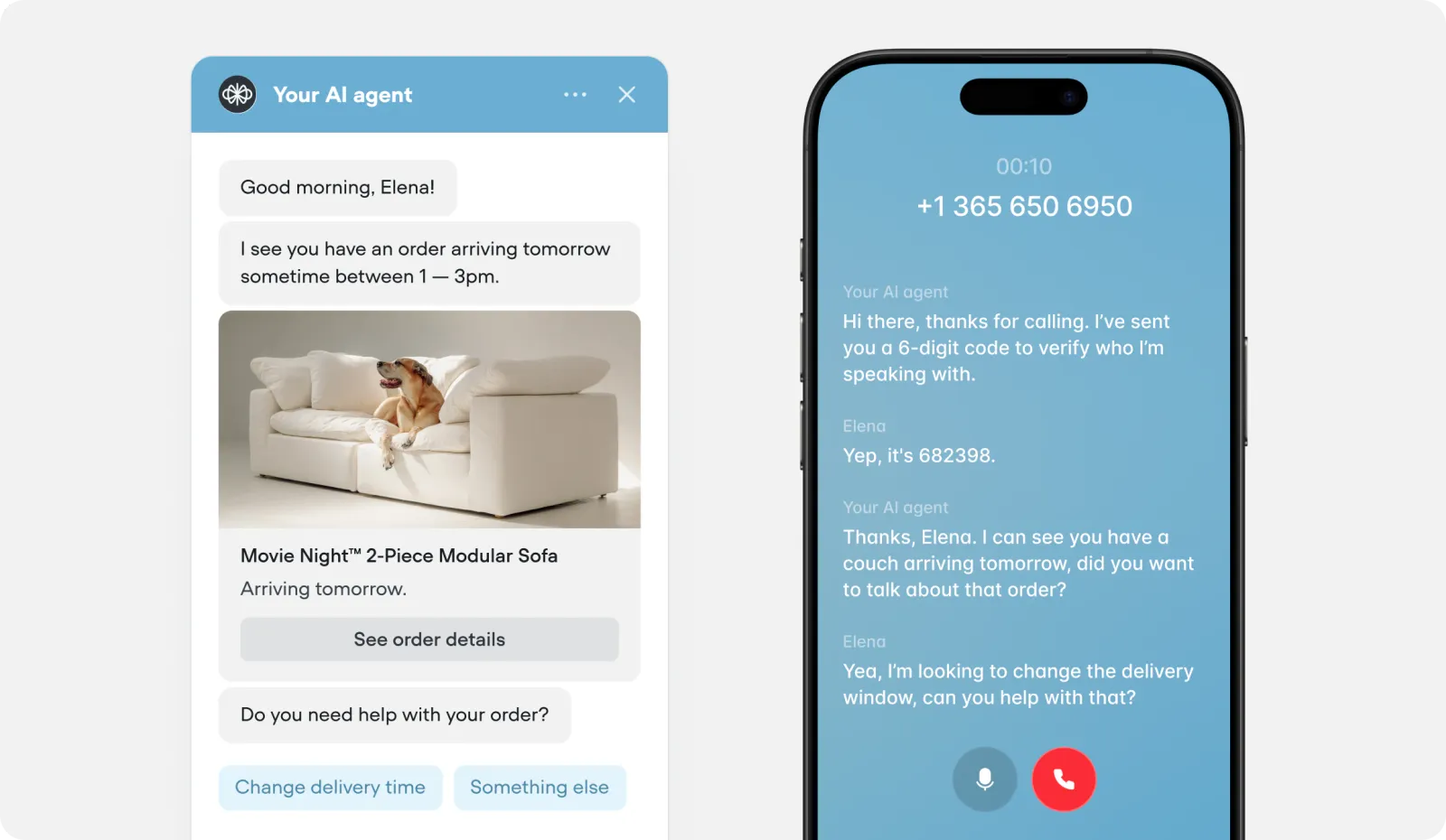
That is a harder problem than it sounds. The channels are technically different. Voice needs speech recognition and synthesis. Chat needs a widget layer and session management. Messaging channels have their own APIs, rate limits, and formatting rules. Email carries different timing expectations than real-time chat. Each channel has its own shape, and building an agent that genuinely works well across all of them takes more than a unified interface bolted on top of separate systems.
The meaningful questions are not about which channels a platform supports on paper. They are about how it handles the seams between them.
The 5 things that separate genuine omnichannel platforms from single-channel tools with adapters
1. Shared agent logic across channels
The core of an omnichannel agent is its logic: the workflows, policies, decision rules, and knowledge that decide how it handles any given interaction. In a genuine omnichannel platform, that logic lives once and runs everywhere. Change a refund policy, update a knowledge base article, or add an escalation path, and the change applies across chat, voice, and messaging at the same time.
In a single-channel tool with adapters, logic is usually duplicated per channel. A change to the chat agent does not automatically reach the voice agent. Teams maintaining these systems end up with channel-specific versions of the same policy: divergent, inconsistent, and harder to keep in sync every month. This is how customers get different answers depending on how they reach you.
Ask any vendor you are evaluating: if I update my return policy, how many places do I have to change it? The answer tells you a lot about the architecture underneath.
2. Cross-channel context and memory
Customers do not experience your support channels as separate systems. They experience them as one relationship with your company. Someone who started in chat and then called expects the voice agent to know what already happened. Someone who emailed yesterday and is messaging today does not want to repeat themselves.
Genuine omnichannel platforms keep a customer context layer that persists across channels and sessions. Not just a transcript, but a structured understanding of who the customer is, what they have contacted you about, what was resolved end to end, and what is still open. When a conversation moves across channels, that context travels with it.
This is technically non-trivial. It needs a shared identity layer that connects the customer across channels, a memory architecture that structures what matters instead of logging everything, and integration with the CRM so context is linked to the customer record your team already uses. Platforms that do this well are meaningfully different from those that do not.
3. Voice as a first-class channel, not an afterthought
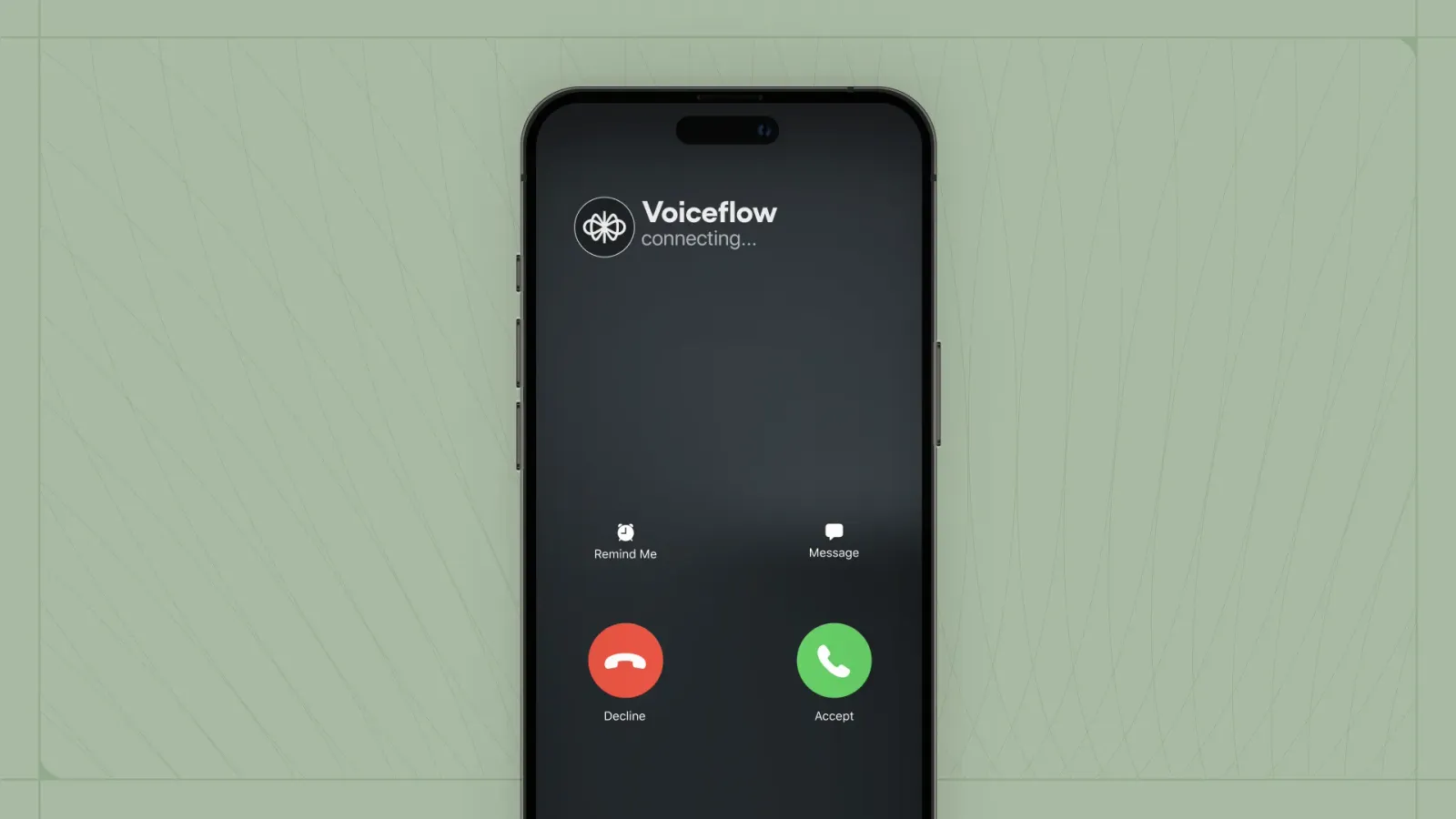
Voice is the channel most AI platforms get wrong in an omnichannel context. Chat-first tools often treat voice as a feature added later: a text-to-speech wrapper over a chat agent that was never designed for spoken interaction.
Voice conversations are structurally different from text. They are real-time. They do not allow the reading time chat does. They need different handling for barge-in (when a customer talks over the agent), silence detection, tone, and natural speech. An agent that sounds robotic, fumbles interruptions, or forces customers to speak in careful, deliberate sentences is worse than no automation for a real share of your customers. Platforms built for the AI call center treat voice as its own channel from the start rather than a wrapper.
When you evaluate omnichannel platforms for voice, ask to see a live voice demo on an interaction type close to yours. The gap between what a platform claims for voice and what it delivers is often large.
4. Channel-appropriate escalation paths
Escalation in an omnichannel environment is more involved than in a single-channel one. A customer on voice should escalate to a human voice agent. A customer on chat should escalate to a human chat agent. A customer on async messaging may not expect an immediate human reply. The escalation logic has to be channel-aware, not just interaction-aware.
Routing is only half of it. When the AI agent hands off to a human, what does that human receive? A full transcript is the minimum. A structured summary (what the customer was trying to do, what the agent attempted, what failed, and where things stand) is what separates a good handoff from one that makes the customer explain themselves again. This is also where a native handoff into your existing live chat queue matters more than a bolt-on integration.
Platforms that handle this well have a configurable escalation layer you can tune per channel, with a handoff data model that carries structured context rather than raw conversation history.
5. Observability across the full channel mix
If you cannot see how your AI agent performs across every channel from one view, you cannot manage it. Channel-siloed analytics, separate dashboards for chat, voice, and messaging, force manual reconciliation to understand aggregate performance and miss the cross-channel patterns that matter most.
A customer who fails on chat and then calls in is a containment failure a single-channel dashboard will never show you. A category of interaction with high satisfaction on chat but poor satisfaction on voice points to a channel-specific problem. Those insights only exist if the analytics layer spans every channel. This is where agent observability stops being a dashboard and starts being how you actually run the operation.
Look for platforms that offer a unified observability view, with the ability to drill down by channel, by interaction type, by outcome, and by customer segment.
Questions to ask in every platform demo
If you are actively evaluating omnichannel AI customer support platforms, bring these to every demo:
- Show me a conversation that starts on chat and transfers to voice. What context transfers?
- If I update a policy in my knowledge base today, how long until every channel reflects it?
- What does the escalation handoff look like from the human agent's side? What do they see?
- Show me the analytics across all channels in a single dashboard. What can I filter by?
- What happens when a customer reaches us on a channel we have not fully configured yet?
- How do I change a workflow without involving an engineer?
- What does onboarding look like, and what does support look like after go-live?
The answers tell you whether the platform is genuinely omnichannel or whether omnichannel is a marketing position sitting on top of a single-channel foundation.
The channel your customers prefer is the one you have to get right
There is no single right channel mix. Different industries, customer demographics, and interaction types favor different channels. What stays consistent across successful omnichannel implementations is this: the AI agent performs well on the channel the customer chose, it knows what happened on the other channels, and it hands off to a human the moment the interaction needs one.
Teams that get this right do not treat channels as separate systems to automate independently. They treat the customer experience as one continuous thing that happens to move across different surfaces, and they build AI agents designed to follow it there. For regulated buyers, that same evaluation extends to security and compliance, because an agent that spans every channel also touches data on every channel.
See omnichannel AI support in action across your stack
Voiceflow is built for teams that support customers across chat, voice, and messaging from one agent logic layer, with a shared knowledge base, model-agnostic control, native live-agent handoff, and observability across every channel in one view.
A personalized demo walks through your specific channel mix, your current stack, and what an AI agent deployment would look like across your environment, not a generic product tour.