Voiceflow named a 2026 Best Software Award winner by G2
Read now


Every business’ conversation designs are going to be specific to their business, the team leveraging conversational experiences, and the maturity of the organization when it comes to conversation design. However there are some common scenarios that can be accounted for in your conversation designs to make them more personalized.
When you’re a regular at a coffee shop, the baristas start to remember who you are and what your order is, and create a personalized experience for you every time you return to their store. Your conversational assistant should work in the same way.
Even a simple “Welcome back” greeting for users who have interacted with your conversational experience in the past can add a layer of customization to the experience.

If you are building an experience that has user de-anonymization, then creating custom experiences for existing customers versus new users is imperative.
Identifying users through your internal systems, asking for credentials, or account information in the beginning of your conversational experience can ensure that you’re answering user questions with appropriate information and, if applicable, using customer data to facilitate the resolution of issues.
Being able to thoroughly test how your assistant will create different experiences for future customers versus existing customers will make your conversational assistant more powerful and more focused.

Regardless of if you’re designing a conversational experience that’s for answering FAQs, facilitating payments, or customer service, if your business offers different product SKUs, trying to create a conversational experience that answers the same question across product SKUs could get complex.
Asking a user which product they’re interested in towards the beginning of the conversation is a great way to make sure you’re giving contextual and relevant information to users based on their intent and interest.

If your team staffs your conversational assistant, regardless of channel whether it be IVR, SMS, website chat, or a mobile experience, and that team is only available during certain times of day, ensuring that you have logic set up in your AI assistant to ensure that you’re setting the right expectations for those operating hours.
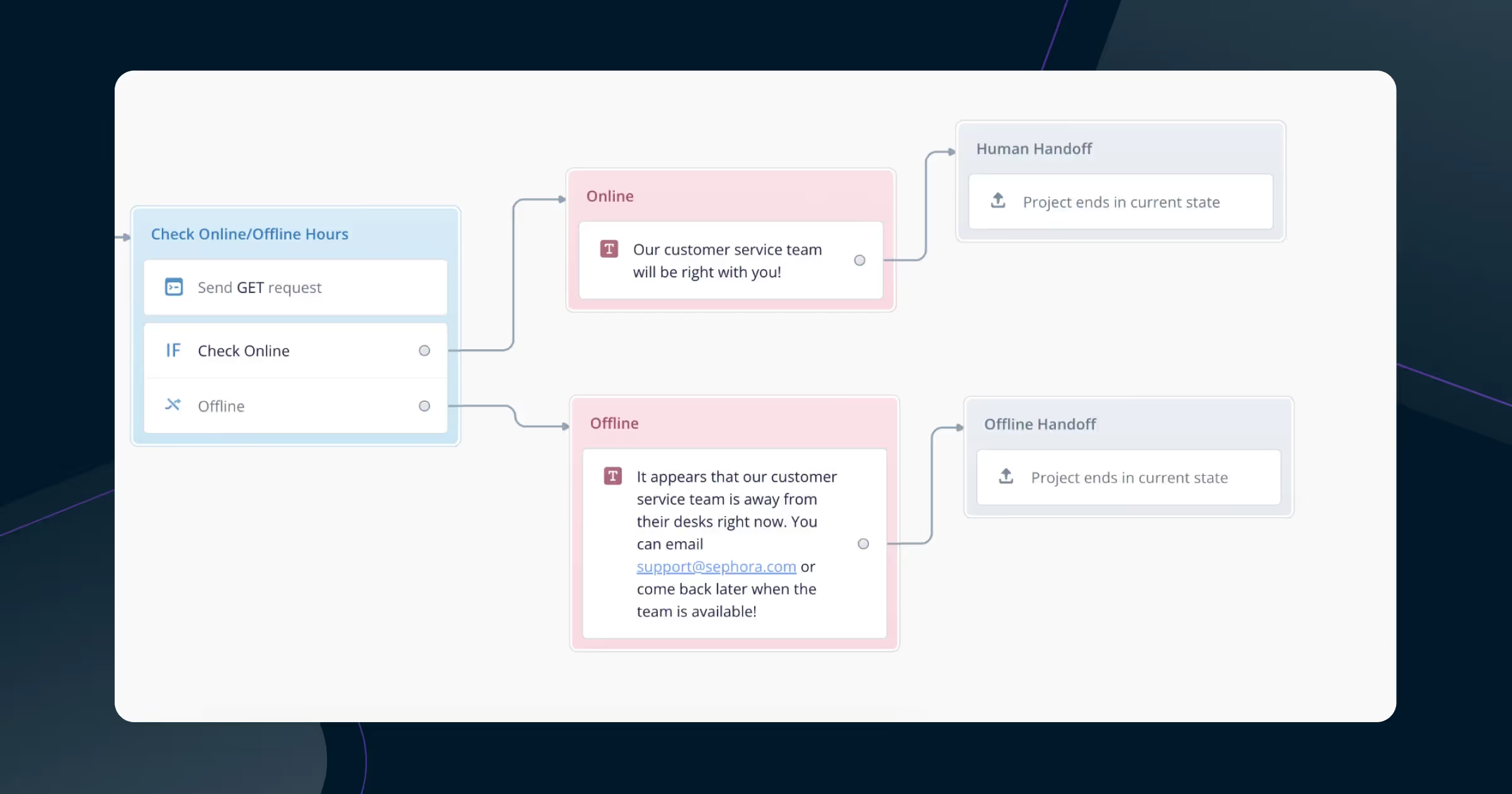
Although conversation designers create happy paths with the best case scenarios for each interaction, your conversational assistants should be able to perform multiple different actions for users engaging with different intents.
Creating individual happy paths for each path your users could go down will create a more robust user experience that increases containment of conversations, answers more questions, and creates more satisfied users.

The design process for a well done conversational assistant isn’t linear and doesn’t happen over night. By focusing on different scenarios and personas that could interact with your assistant before or during the design process, companies will be adding more context to their conversational bots, make user testing a lot more informative to your design process, and add more bots into the world that create better user experiences.
To learn more about how to use User Personas by Voiceflow, check out this blog post.


.avif)
.avif)