Voiceflow named a 2026 Best Software Award winner by G2
Read now

Watch the recording:
Kathryn: Let me tell you what I mean by constraints. When I say constraints, I mean conditions that need to be met and problems you need to solve for your project to be successful.
When I'm making something with constraints as design process, I identify my constraints, and then I turn those constraints into questions. Then I take the answers to those questions and use them as a framework for creating the experience and characters.
This is a process that I bring to every project because there are constraints that come with each of them. For example:
But these constraints - and the solutions for them - are what makeup best practices for voice experiences. These are what I call table stakes.
Kathryn: Let's first talk about the Division Network. This was a skill I helped create in collaboration with Ubisoft, which has a multi-million dollar game property called Tom Clancy's The Division.
In anticipation of the sequel Tom Clancy's The Division 2, the main asks for the skill were:
So what Ubisoft brought to me at the beginning was a rough concept - a piece of IP with rabid fans already attached. Luckily, this giant piece of IP was consolidated into big story bibles as we only had six weeks to build this high quality, very visible property.
So how did I take this and begin designing something?
The first thing I had to do was get my post-its and break down [this experience] into bite-sized pieces that I could deal with. I had a lot of different post-it maps for this design, but let's start with the section called problems — which is another word for constraints. The constraints for this experience that I identified included, but were not limited to:
Now let's take these constraints and apply them to constraints as a design process within the experience.
Constraint: This experience must happen on an Alexa.
Question: Why is this happening on an Alexa?
Answer: For me, the answer to this question was that the 'Shade Network' - which is the in-game AI network - has been comprised by double agents, and so our hero has hacked into the Alexa environment.
This was the answer I came up with. The question of 'why is this experience happening on an Alexa,' isn't just a given, [and so] I used that constraint and baked it into the structure of the experience.
Let's look at another example.
Constraint: This experience must be interactive.
Question: Why is this interactive?
Answer: The answer I came up with is that this classified material requires authorization and passwords. So again, the interaction isn't because it's cool or because it's a voice experience, but rather I designed an experience that necessitated interaction by its very nature.
Some of the constraints (mentioned earlier) can be seen on the left in the image below. On the right are the different design choices I came up with for this experience.

Some constraints/answers include:
Now let's take some of these answers and principles and see how they manifested in the final design.
Enable and try out the Division Network skill here.

Starting from when you open the app for the first time, the audio you hear is really encapsulates the experience design for this project. In the first 12 seconds, we acknowledge the platform in a creative and cheeky way. We establish the tone of the experience, which is this hacky, technological, and militaristic world that we're in. We also introduced the character Issac, who is an in-game character and male voice-over talent you hear.
And so, within the first seconds of opening this experience, I provide in-game content to hook established fans of the property and require user interaction when the character Issac says, "agent, state your name." After that happens, Issac then says, "voice scan match — identity confirmed," so we understand we've entered this classified world.
In the context of constraints as design process, we took a constraint, turned it into a question, answered that question, and used that answer to create the experience design.
Now let's apply that same process to character design. First, let's look at some of those constraints from earlier.
Constraints:
How do these constraints help me design the character that ends up being the hero of our story?Let's take the first constraint.
Constraint: Stakeholders want an experience that appeals to new customers.
The questions that I produced from that constraint were:
To answer this question, I conducted stakeholder interviews with people across all kinds of departments - from people in San Francisco to New York to Sweden. And what's really impressive is that the answers were very in line with one another. They wanted this skill to feel aspirational, badass, and they wanted it to be more inclusive and to attract new customers.
Let's continue to look at more character design answers that arose from constraints:
How did they do that? Clearly, that tells me that this person was a securities engineer in their civilian life.
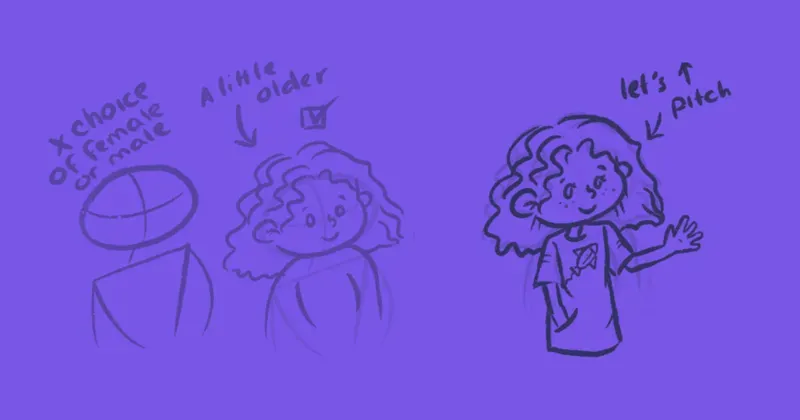
How can I design something that I'm excited about given this world? And so I decided on a black woman who is badass and finds herself at the heart of this military conspiracy.
Why do they do that? Because she (our hero) needs the users to help her save the country from tyranny. Why does she go through all that trouble? She's deeply patriotic and holds duty above all else.
Again, we used this process of constraint - where we turn that constraint into a question and answer that question to arrive at character design. With this experience, we were really happy that this process was so quick. Six weeks is no time to create 20 minutes of content, but we were really happy with the results and received some amazing reviews.
One user said, "...while I can't tell if this is just great marketing or truly integrated into where I'm at in the game so far, it suggests that with integration like this, gaming will start to be taken to a new level of immersion. Well done!"
The above quote - as a designer - tells me that i did a good job going into the story bible and creating an experience that was canon - or material accepted as officially part of the story. It also shows us whether or not we reached our goals. These are people talking about how they're so excited for the game to drop. They feel so immersed. Some are even talking about taking time-off to play the game.
So this is to say that this process of breaking things down and using constraints to build your design choices really works. If you're looking at the goals you have for an experience, this [process] will help you reach them.

For example, in the image above, figure #1 is very complex. But is it good? I'm sure it's good for someone, but I don't know if I want to meet the person for whom it is good. Maybe what your user needs is figure #3. Or maybe it's more like figure #4. Or perhaps all they need is figure #2 — or a camel to get across the desert.
All of this is to say the following: use constraints, the needs of the project, and the needs of the users to illuminate the path you need to guide them on.
These are things that have really shaped the way I think about design and in turn the type of designer I am.


.avif)
.avif)