Voiceflow named a 2026 Best Software Award winner by G2
Read now


In the first wave of AI adoption, most companies treated AI agents like projects.
Scope it. Build it. Launch it. Move on.
The problem? AI agents aren't static software releases. They talk to customers every day, in a world where questions change, expectations shift, and business needs evolve. An agent that was great at launch can quietly become a liability six months later — and nobody notices until customers do.
The teams getting the most out of AI aren't treating their agents like projects. They're treating them like products.
Products get monitored. They get improved. They evolve alongside the business and the customers they serve. And none of that is possible without observability.
Observability isn't just about knowing when something breaks. It's about building a system that gets better over time.
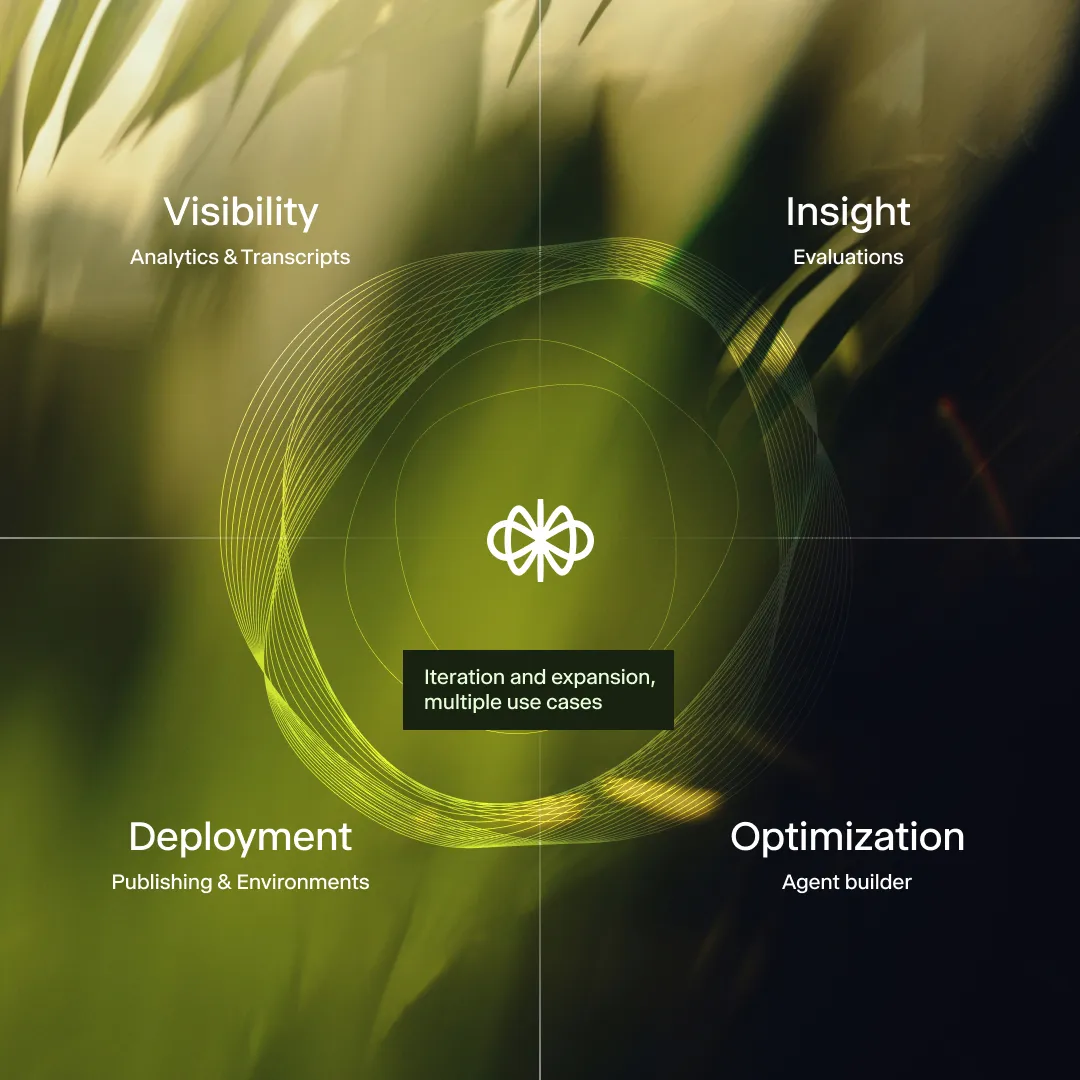
We think about this as the AI Agent Observability Loop— four stages that feed into each other, creating compounding momentum:
Visibility → Insight → Deployment → Optimization
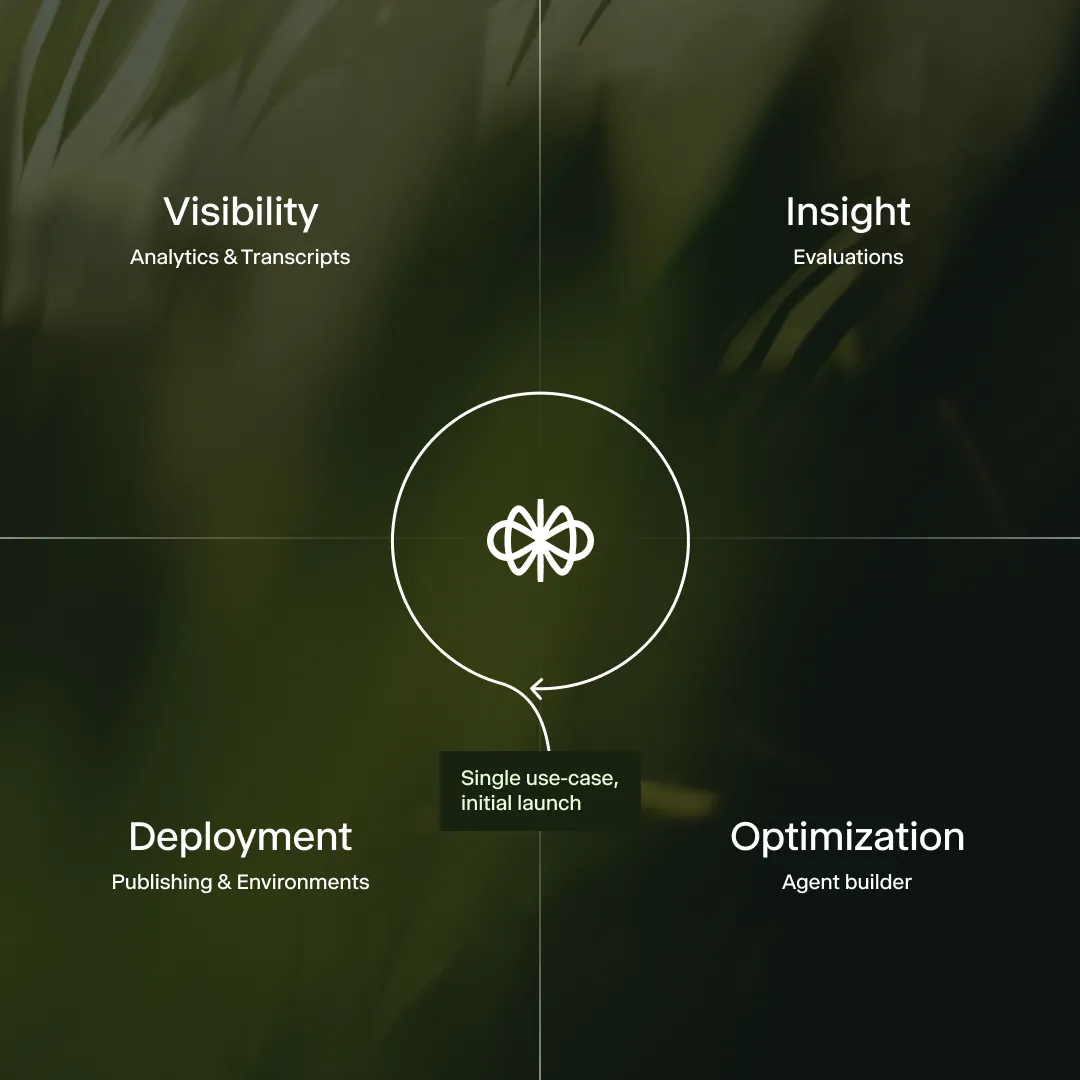
Here's how each stage works in practice.
Every improvement starts here.
You need to see what your agent is actually doing — not just whether tickets are getting deflected, but what customers are asking, where the agent handles it well, and where it falls flat.
Conversation transcripts are your ground truth. They give you a window into real interactions at scale, surfacing the stuff that summary metrics will never show you.
It's the difference between reading a quarterly report and actually talking to your customers. The numbers tell you something went wrong. The transcripts tell you why. You can't improve what you can't see.
Visibility gives you the raw material. Insight is where it becomes useful.
This is where evaluations come in. Instead of manually reading every conversation, teams can run automated analysis to measure accuracy, task completion, hallucination rate, and response quality across thousands of interactions at once.
Think of it like a portfolio review. You're not analyzing every single trade — you're looking for patterns, identifying where the strategy is working, and reallocating toward what's generating returns. The output isn't just data. It's direction.
Once you know what to fix, you need a safe way to test and ship it.
This is where the AI development lifecycle starts to look a lot like how good operators run new initiatives. You don't roll out a new pricing model company-wide on day one — you pilot it, measure it, and validate it before it scales. Same principle here. Changes get built in isolated environments, tested against simulated interactions, and validated before they touch production. No surprises for customers while you're iterating.
It also opens the door to real experimentation — different prompts, different workflows, different decision logic — so you can see what actually moves the needle before committing to it.
This is where the loop really kicks in.
With the first three stages in place, teams stop playing defense. Instead of reacting to problems, they're running structured experiments: testing new knowledge sources, refining prompts, tightening workflows. Every improvement feeds the next cycle.
Better prompts lead to better conversations. Better conversations build customer trust. More trust opens the door to expanding AI into new use cases. New use cases generate more interactions — and more opportunity to learn.
That's the first loop. But here's where the product mindset really pays off.
Teams that treat their agent like a product don't just improve it — they scale it. A well-performing agent in one use case becomes the blueprint for the next. The same infrastructure, the same improvement processes, the same observability tooling gets applied to a new workflow, a new channel, a new team. Volume goes up. Unit costs go down. ROI compounds.
Think of it like a franchise model. The first location is where you figure out the playbook. Once it's working, you're not starting from scratch every time you expand — you're replicating a proven system. Each new use case benefits from everything the previous one taught you.
That's the second loop: agents don't just get better, they multiply.
Teams that struggle with AI agents usually made the same mistake: they treated the agent like a finished thing.
Without ongoing ownership, knowledge goes stale, prompts degrade, and performance quietly erodes. Customers notice before the team does.
Observability is what prevents that. It's not a feature — it's the operating model that keeps agents competitive, reliable, and aligned with where the business is actually going.
Voiceflow's observability suite gives teams everything they need to monitor, evaluate, and continuously improve their agents — from real-time transcripts and analytics to evaluations and testing environments.
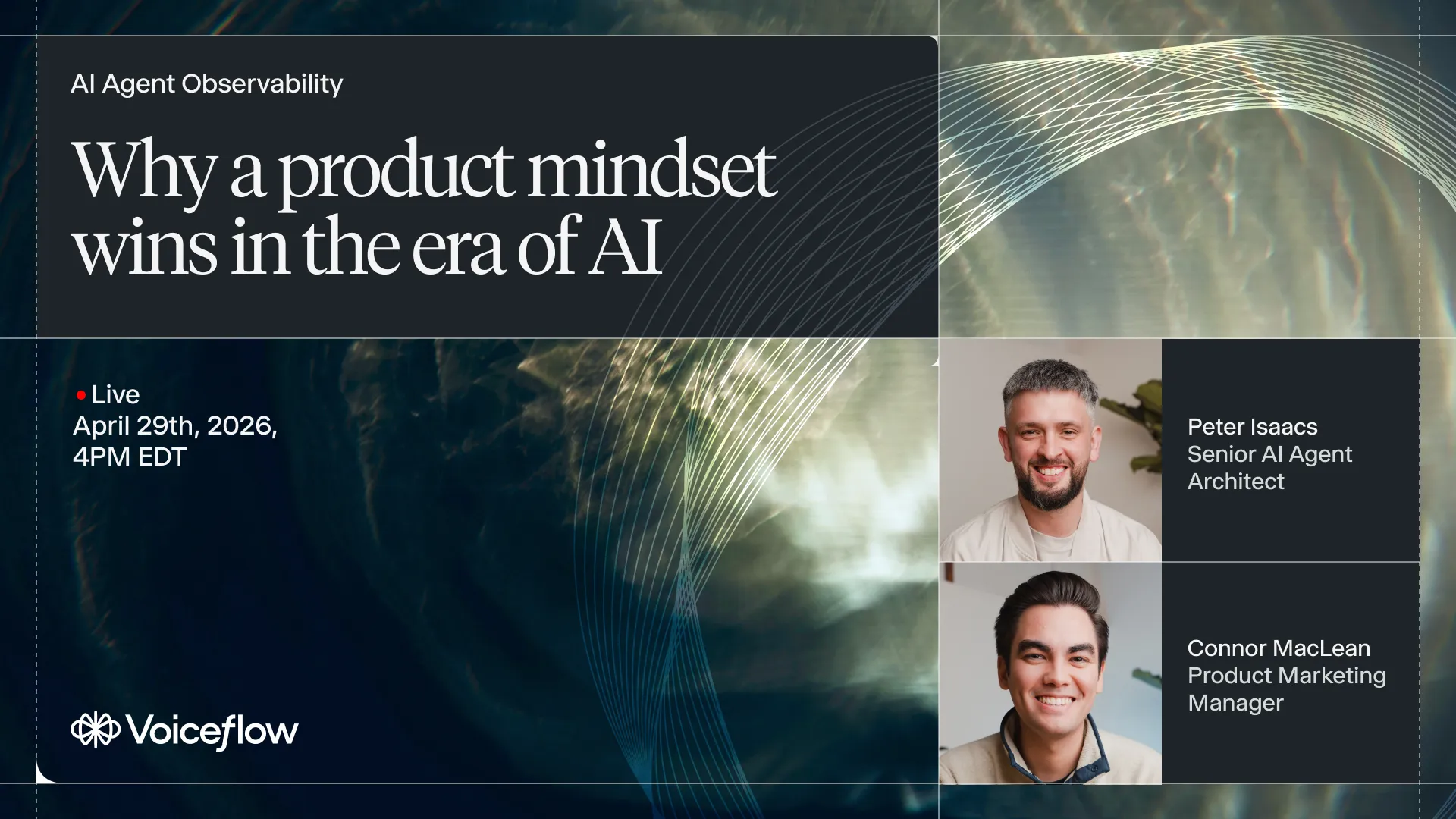
On April 29th, you can dive deeper into the the world of AI agent observability with Peter Isaacs. Register for our webinar, Why a product mindset wins in the era of AI, and you'll hear from AI agent experts and Voiceflow customers on how they launch, iterate, and scale their AI agents using Voiceflow's Observability Suite.


.avif)
.avif)