



In today’s digital-first world, customers expect fast, accurate, and convenient support. However, traditional customer service methods, such as long wait times, static FAQ pages, and overloaded support teams, often fail to meet these expectations. This is where FAQ chatbots come into play.
An FAQ chatbot is an AI-powered virtual assistant designed to automate responses to frequently asked questions, ensuring that customers receive instant, 24/7 support while reducing operational costs. This guide will explore everything you need to know about FAQ chatbots, their benefits, types, use cases, and how to implement one successfully. By the end, you’ll understand why an FAQ chatbot is a must-have tool for improving user experience and streamlining customer interactions.
What Is an FAQ Chatbot?
An FAQ chatbot is an AI-driven virtual assistant designed to automate responses to frequently asked questions. Instead of requiring customers to manually search through an FAQ page or wait for a human agent, a chatbot provides instant, conversational answers based on a structured knowledge base. These chatbots can be integrated into websites, mobile apps, and messaging platforms, making them accessible to customers wherever they are.
FAQ chatbots are particularly effective for handling repetitive and straightforward queries, such as "What are your business hours?" or "How do I reset my password?" By automating these interactions, businesses can free up their support teams to focus on more complex issues, improving overall efficiency and customer satisfaction.
How an FAQ Chatbot Works
The functionality of an FAQ chatbot is relatively straightforward but highly effective. Here's a step-by-step breakdown of how it works:
- User Interaction: A customer asks a question through the chatbot interface on a website, app, or messaging platform.
- Query Analysis: The chatbot analyzes the query using Natural Language Processing (NLP) or predefined rules to understand the intent behind the question.
- Response Matching: The chatbot matches the query with the most relevant response from its FAQ database.
- Follow-Up Questions: If necessary, the chatbot may ask follow-up questions to narrow down the issue and provide a more personalized answer.
- Handoff to Live Agent: If the chatbot cannot resolve the issue, it seamlessly transfers the customer to a live support agent, ensuring that the user's needs are met.
This process ensures that customers receive quick and accurate answers, reducing frustration and improving their overall experience with your brand.
Where FAQ Chatbots Are Used
FAQ chatbots are versatile tools that can be deployed across various industries and platforms. Here are some of the most common use cases:
- Business Websites: Handle product or service inquiries, provide company information, and assist with account management.
- E-Commerce Platforms: Assist with order tracking, returns, payment questions, and product recommendations.
- Mobile Apps: Provide in-app guidance and support, helping users navigate features and troubleshoot issues.
- Social Media and Messaging Apps: Integrate with platforms like WhatsApp, Facebook Messenger, and Slack to offer support where customers are already active.
Industries such as Ecommerce, SaaS, healthcare, finance, and education have particularly benefited from the implementation of FAQ chatbots. For example, in healthcare, chatbots can answer common patient inquiries about appointments, insurance, and medical services. In finance, they can assist with loan applications, interest rates, and account security questions.
Market insight: The global chatbot market is projected to grow from $2.9 billion in 2020 to $10.5 billion in 2026, representing a compound annual growth rate (CAGR) of 23.5%, according to Markets and Markets Research.
Key Benefits of an FAQ Chatbot
1. 24/7 Instant Support
Customers receive immediate responses anytime, anywhere. Businesses operating globally benefit from 24-hour service availability, leading to higher engagement and customer satisfaction.
2. Reduced Support Costs
By automating repetitive inquiries, businesses can achieve outcomes like IBM and Google that achieved a cost savings of up to 40% by augmenting staff. This allows companies to optimize their human resources for more complex queries.
3. Faster Response Times
Research predicts AI-powered enterprises can respond 50% faster than their peers. These accelerated response times allow workers to focus on more important tasks that may not be so easy to automate.
4. Improved Customer Experience
Customers no longer need to navigate through complex menus or wait in long queues. The chatbot provides conversational, interactive assistance, boosting user satisfaction.
5. Higher Conversion Rates
Businesses like Sanlam used Voiceflow to build a chatbot that resulted in a 45% offer-to-lead conversion rate (source: 5 Strategies Product Leaders Use to Transform AI-Powered Customer Experiences).
6. Seamless Integration with Live Agents
If a chatbot cannot resolve an issue, it seamlessly escalates the case to a live agent, ensuring a smooth customer service experience.
7. Multilingual Support
Businesses with a global audience can deploy chatbots that support multiple languages. This leads to a wider net being cast across a businesses customer base increasing support coverage.
8. Data-Driven Insights
FAQ chatbots collect data on frequently asked questions, customer pain points, and chatbot performance, which businesses can leverage to optimize their support strategies.
9. Streamline Internal Processes
Chatbots aren't just for customer-facing interactions; they can also streamline internal operations. Businesses with customer engagement platforms incorporating AI can boost operational efficiency by 25% (source: Rich Communication Services (RCS) Messaging).
10. Traffic Boosts
Companies like Parkfield Commerce have managed to boost customer traffic for a client by nearly 73% just from integrating AI solutions into the clients e-commerce platform.
11. Reduce Cart Abandonment Rates
In eCommerce, chatbots can help reduce cart abandonment by sending timely reminders or offering discounts. Retailers using chatbots have seen significant decreases in cart abandonment rates (source: ecommerce chatbot) when using AI automations and chatbots.
Types of FAQ Chatbots
There are two main types of FAQ chatbots, each suited to different business needs:
- Rule-Based FAQ Chatbots: These chatbots follow predefined rules and decision trees. They are ideal for handling structured questions with straightforward answers, such as:
- What are your business hours?
- How do I reset my password?
- Best for: Small businesses, eCommerce, and straightforward customer support.
- AI-Powered FAQ Chatbots: These chatbots use Natural Language Processing (NLP) to understand complex queries and variations in phrasing. They can:
- Detect synonyms and intent-based questions.
- Provide more dynamic, human-like responses.
- Learn and improve over time through machine learning.
- Best for: Large businesses, SaaS platforms, and multi-industry support.
Examples and Use Cases of FAQ Chatbots
FAQ chatbots are incredibly versatile and are used across industries to enhance efficiency, reduce support costs, and improve customer experience. Here are some key use cases:
1. E-Commerce
- Answer product-related FAQs to assist shoppers in making informed decisions.
- Provide real-time support for order tracking, returns, and refunds.
- Offer personalized product recommendations based on browsing history and customer preferences.
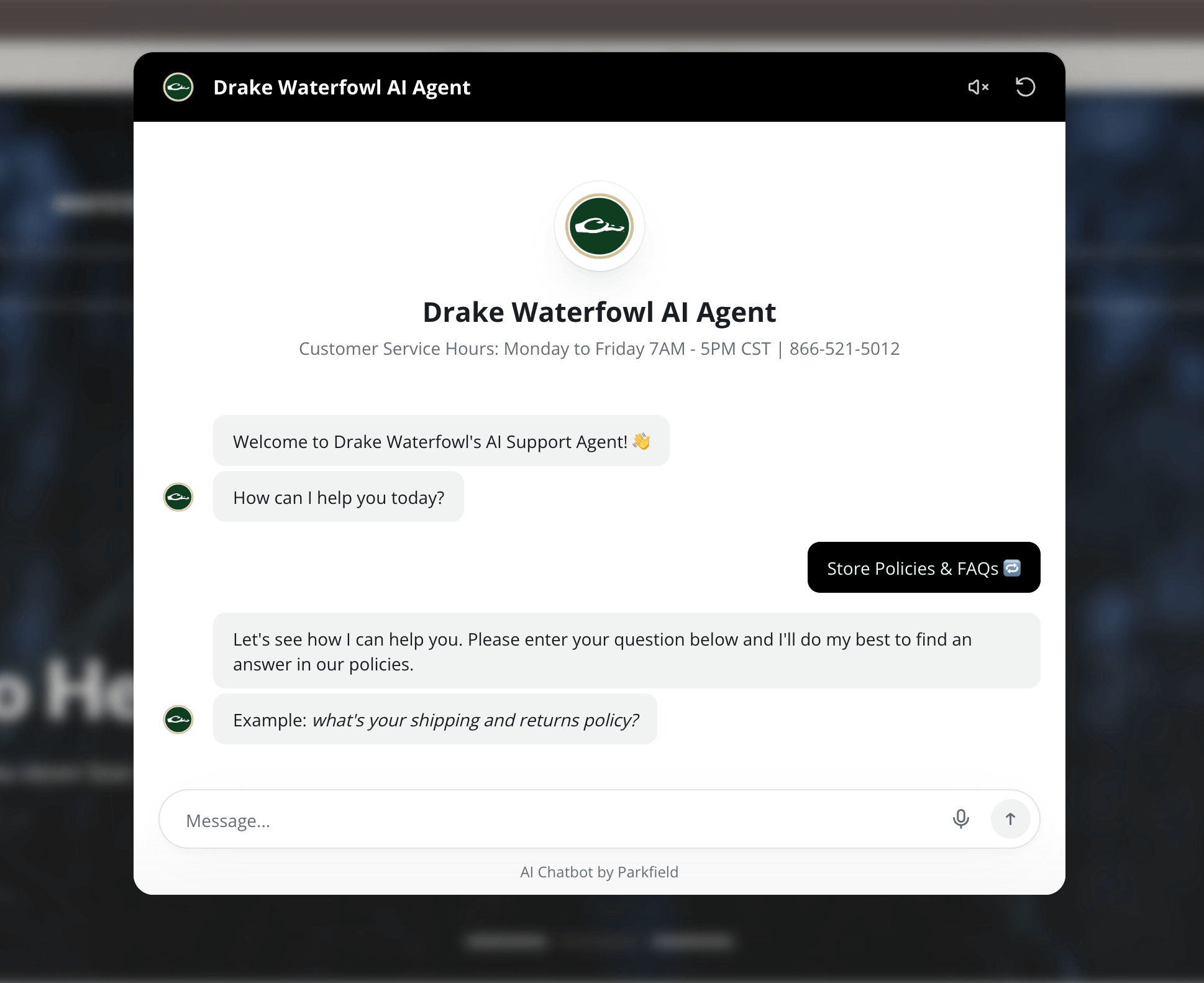
Impact: Businesses like Drake Waterfowl are managing 50% of customer support using AI while not seeing “any negative feedback from customers”.
2. SaaS and Tech Support
- Deliver instant help on account setup, billing, and troubleshooting.
- Offer in-app chatbot support to guide users through new features.
- Reduce ticket backlog by automating responses to common technical queries.
Impact: With Voiceflow’s customer support agent Tico there has been a 97% deflection rate (source: Introducing Tico) while still keeping a solid 93% CSAT score.
3. Healthcare
- Answer common patient inquiries related to appointments, insurance, and medical services.
- Direct users to reliable health resources and emergency contacts.
- Assist with medication reminders and basic health questions.
Impact: Healthcare providers using chatbots can provide 24/7 general support to both healthcare staff and patients when they need it most .
4. Financial Services
- Assist customers with loan applications, interest rates, and account security questions.
- Automate fraud alerts, transaction tracking, and balance inquiries.
- Provide instant support for understanding financial products and services.
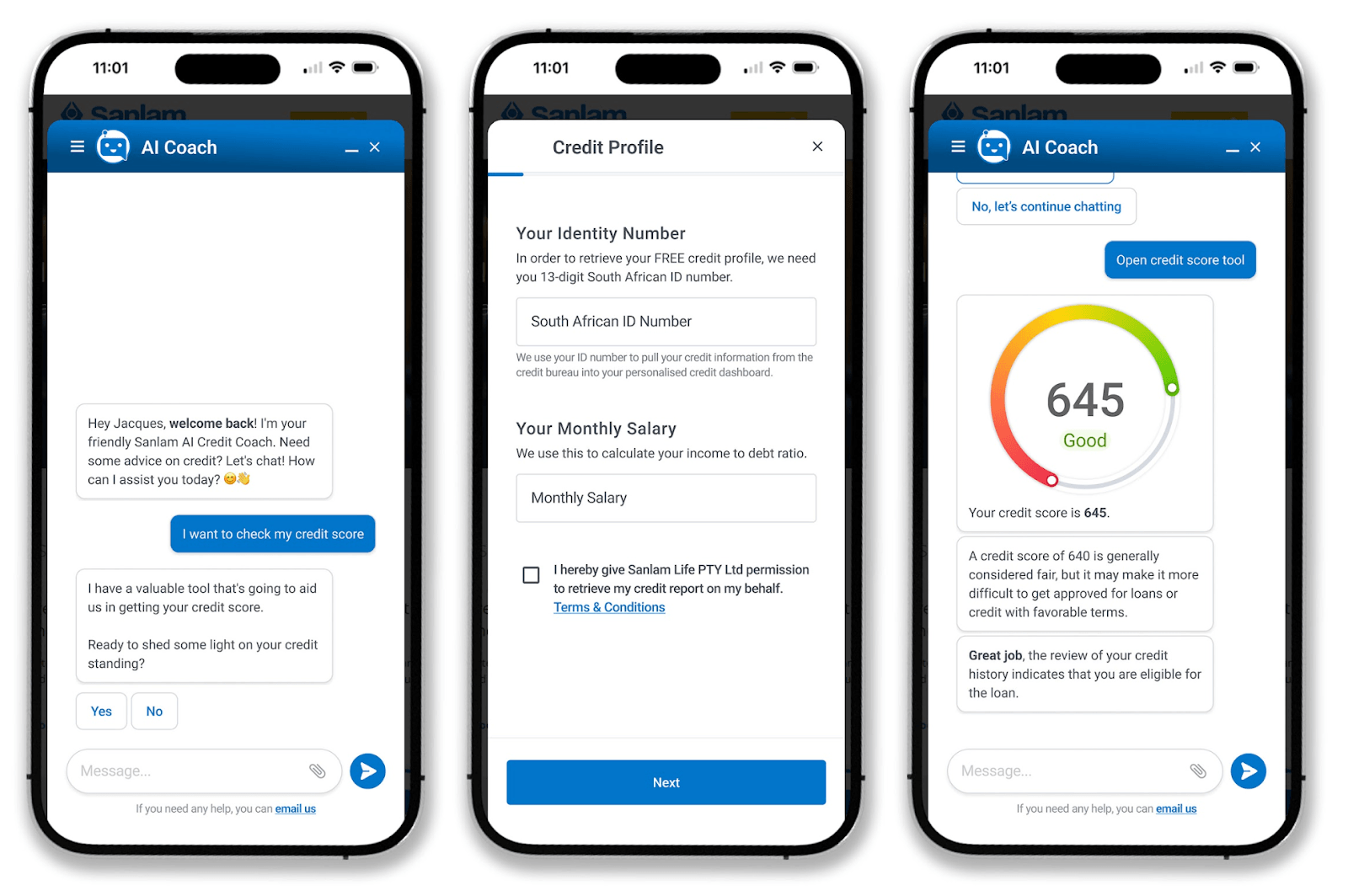
Impact: Sanlam Studios managed to use their AI coach to reduce the number of follow-up questions to a zero showing the agents ability to address complex questions with a 100% success rate.
5. Education and Online Courses
- Handle course enrollment, deadlines, and syllabus FAQs for students.
- Guide learners to educational resources, video lectures, and assignments.
- Provide administrative support for common questions about school policies and tuition.
Impact: Online learning platform Khan Academy has implemented an AI tutor "Khanmingo” helping make tutoring more accessible for students. Accounting for students' unique questions and learning needs.
How to Build a FAQ Chatbot in Five Steps
Building an FAQ chatbot doesn't require advanced technical skills, thanks to no-code platforms like Voiceflow. Here's a step-by-step guide:
1. Identify Common Customer Questions for the Chatbot to Answer
Review support tickets, live chat logs, and email inquiries to identify frequently asked questions. This will form the foundation of your chatbot's knowledge base. Pro tip: Analyze at least 3-6 months of support data to identify seasonal or cyclical questions.
2. Pick a Chatbot Platform
No-code tools like Voiceflow simplify chatbot development. Their drag-and-drop, node-based builder allows you to create interactive and engaging chatbot conversations without writing a single line of code. Other popular platforms include Chatfuel, ManyChat, and Botsify, each offering different features and integrations.
- Want a head start? Sign up for Voiceflow and use our FAQ chatbot template to build an FAQ bot quickly!
3. Create a FAQ Knowledge Base
Add clear, concise responses to each common question. Organize FAQs into categories for easy navigation and ensure the chatbot can handle variations in phrasing. Best practice: Include at least 5-10 alternative phrasings for each common question to improve recognition accuracy.
4. Customize and Build FAQ Chatbot Flows
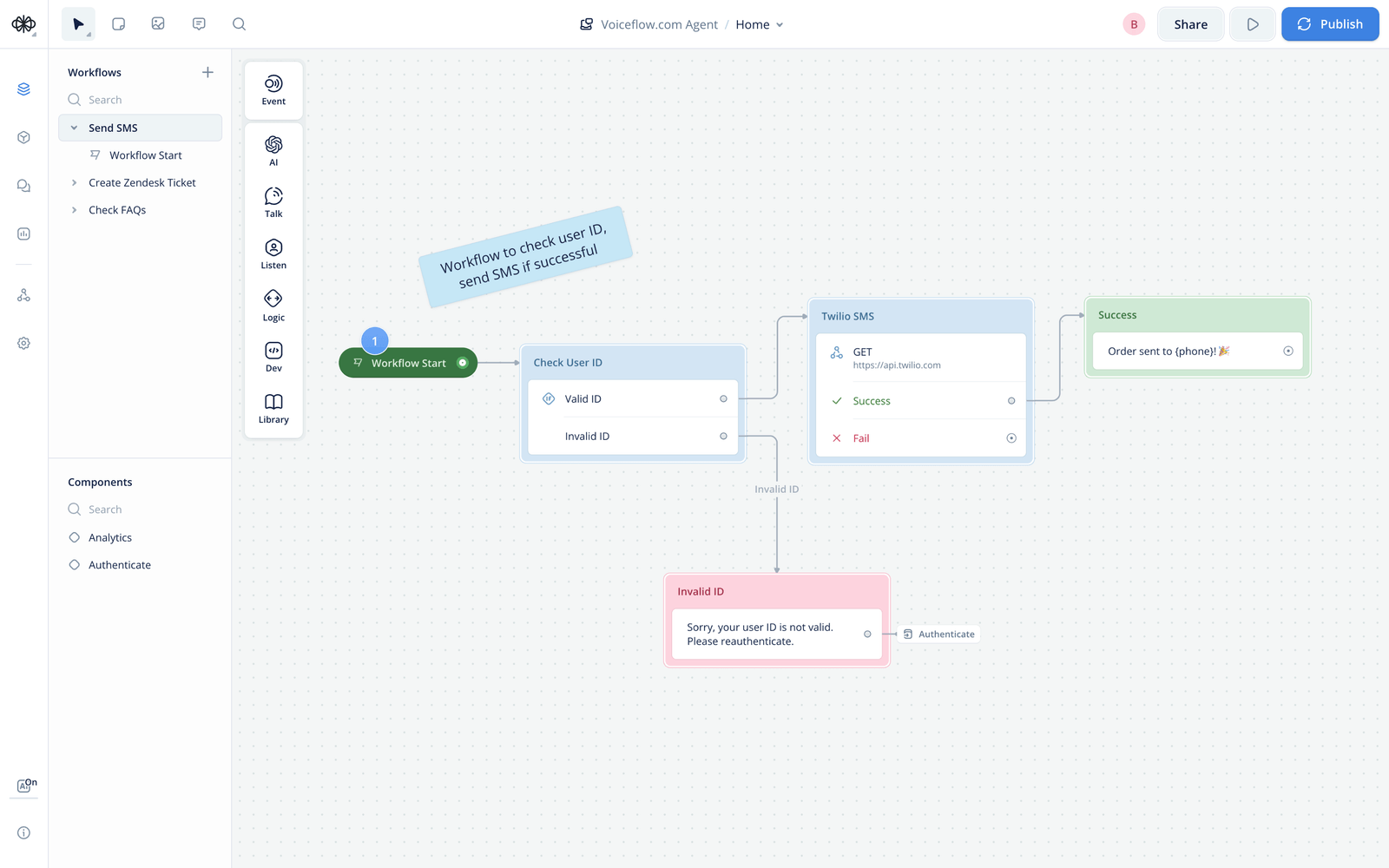
Use Voiceflow's visual interface to build dynamic conversation flows. Add buttons, quick replies, and follow-up prompts to improve user engagement and guide customers to the right answers. Implementation tip: Start with your top 20 most frequently asked questions, then expand gradually based on user interactions.
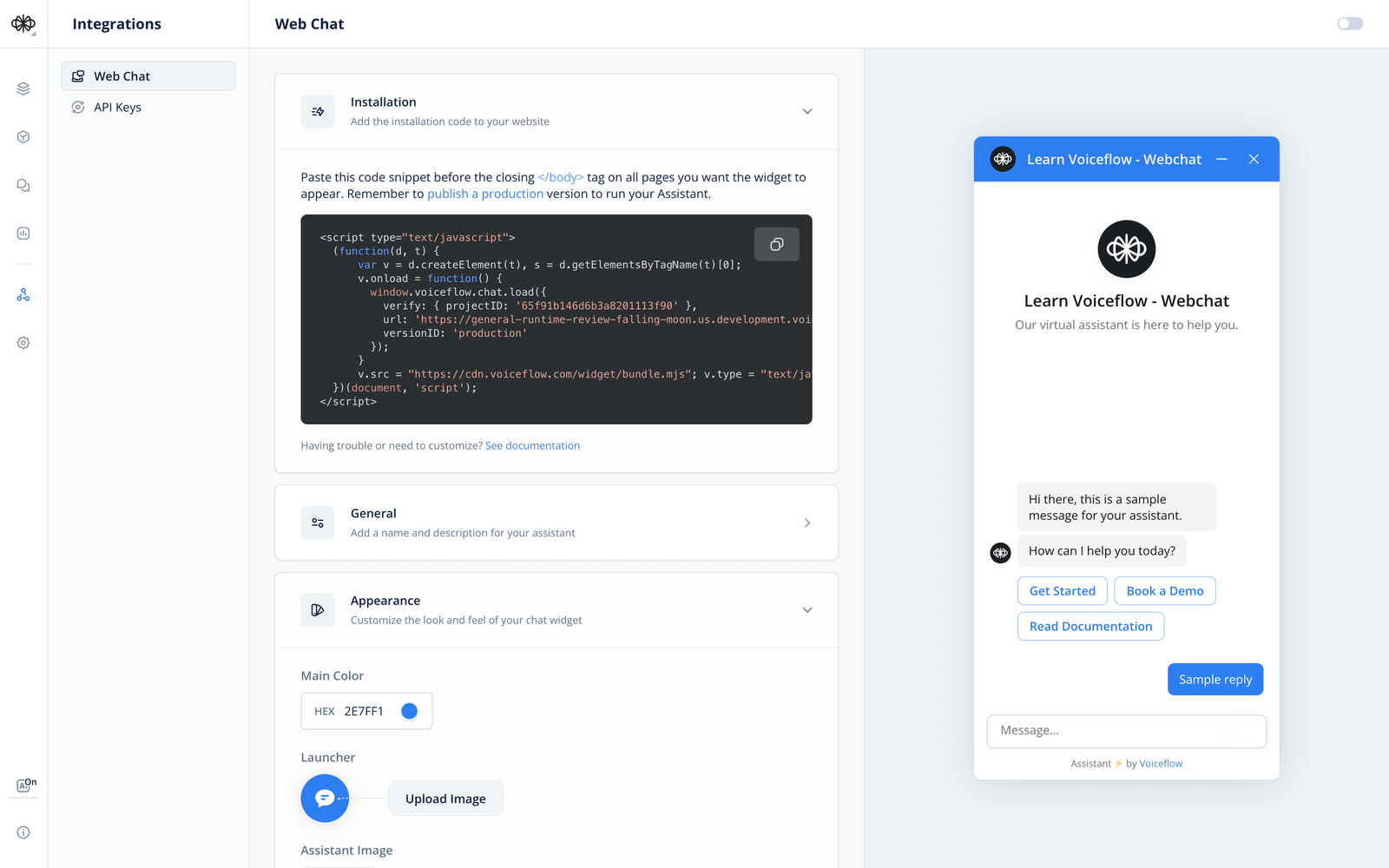
5. Deploy and Monitor Performance of AI Chatbot
Launch the chatbot on your website, customer portal, or messaging apps. Use built-in analytics to track chatbot performance, identify areas for improvement, and refine responses over time. Key metrics to monitor: Resolution rate, transfer rate to human agents, average conversation length, and user satisfaction scores.
Implementation insight: Most businesses see a positive ROI within 6-9 months of implementing an FAQ chatbot, with an average implementation time of 4-8 weeks depending on complexity.
Overcoming Common FAQ Chatbot Challenges
While FAQ chatbots offer numerous benefits, implementing them effectively requires addressing some common challenges:
- Limited Understanding: Basic chatbots may struggle with complex queries or variations in language. Solution: Regularly update your chatbot's knowledge base and consider using AI-powered options for more sophisticated needs.
- Integration Issues: Connecting chatbots with existing systems can be challenging. Solution: Choose platforms with pre-built integrations for your CRM, help desk, and other essential tools.
- Maintaining the Human Touch: Customers may feel frustrated if interactions seem too robotic. Solution: Use conversational language, personality elements, and clear paths to human support when needed.
- Setting Realistic Expectations: Chatbots aren't perfect for every situation. Solution: Be transparent about chatbot capabilities and ensure smooth handoffs to human agents for complex issues.
Future Trends in FAQ Chatbot Technology
The future of FAQ chatbots is evolving rapidly with several emerging trends:
- Voice-Enabled FAQ Chatbots: As voice search continues to grow, voice-activated chatbots will become more prevalent, allowing users to ask questions conversationally through voice commands.
- Emotion Recognition: Advanced chatbots will be able to detect user frustration or confusion and adjust their responses accordingly, providing a more empathetic experience.
- Predictive Support: Using machine learning, chatbots will anticipate user questions based on behavior patterns and proactively offer assistance before issues arise.
- Augmented Reality Integration: FAQ chatbots will guide users through complex processes using AR, such as showing how to assemble products or troubleshoot equipment.
Conclusion: The Future of Customer Support Starts with FAQ Chatbots
Customer support and FAQ handling will never be the same again. No more frustrated customers abandoning your website because they couldn’t find answers fast enough. No more overworked support agents answering the same repetitive questions all day. With an FAQ chatbot, businesses can revolutionize the way they interact with customers, providing instant, accurate, and consistent responses anytime, anywhere.
Implementing an FAQ chatbot means eliminating unnecessary wait times, improving customer satisfaction, and streamlining operations. It’s not just about automation; it’s about delivering a seamless, friction-free experience that keeps customers engaged and coming back. Businesses that embrace chatbot technology are setting a new standard where support is always available, always helpful, and always efficient.
Building an FAQ chatbot has never been easier. With no-code platforms and AI advancements, any business (large or small) can integrate an intelligent, self-service assistant that saves time, reduces costs, and enhances customer engagement. The future of customer support is here, and it’s time to take advantage.
Don’t let outdated support methods hold you back. Start mapping out your most common customer questions today and empower your business with an FAQ chatbot because great customer service should never have to wait.
![How To Create Live Chat For Your Website [No Code]](/images/67cef0f36e42fcc5321069d5_665f4b58664a74547a4d95d2_Chatbot-20Basics.png)
![10 Best Real-Life Chatbot Examples [2026 Ranking]](/images/6995bfb8e3e1359ecf9c4e53_665f773cc809d49634d8743d_Chatbot-20Basics.webp)